




St. Augustine is the oldest, still occupied city in the U.S.!
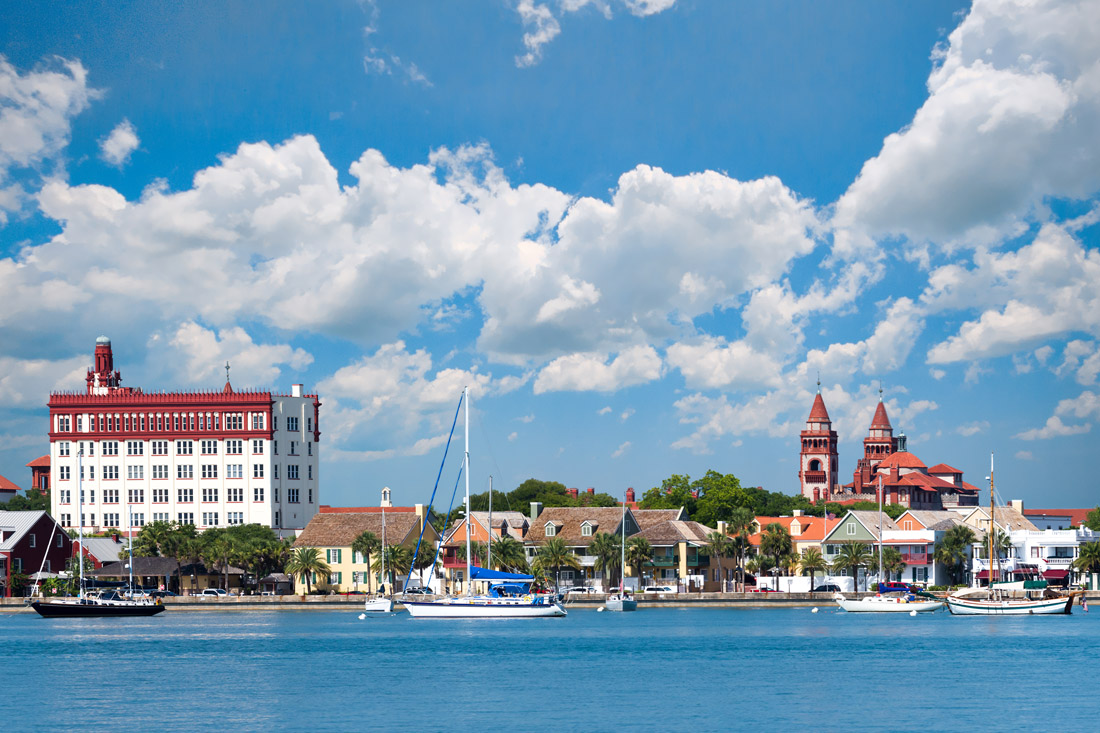
While this year marks the official 250th birthday of the U.S., St. Augustine is here to remind us that this land has roots that go back way farther than that.
It was 1513 when famed Spanish explorer Ponce de León set foot on what is now Floridia soil. Legend has it his goal was to discover a fountain of youth. It’s a myth that continues to draw the curious to St. Augustine’s Fountain of Youth Archeological Park where a coquina (crushed shells and coral) structure houses a natural spring that’s been a recorded visitor attraction since the 1860s. During a recent visit, I was game, filling a small paper cup from the fountain and downing it, but I can’t report any noticeable wrinkle repair.
The area surrounding the park has been a magnet for archeologists who have uncovered evidence of civilizations who inhabited the area before the Spanish claimed it. But it’s the conquistador Pedro Menéndez de Avilés who gets the credit for routing the French from the area and founding St. Augustine in 1587, making it the oldest continuously occupied European settlement in the continental U.S.
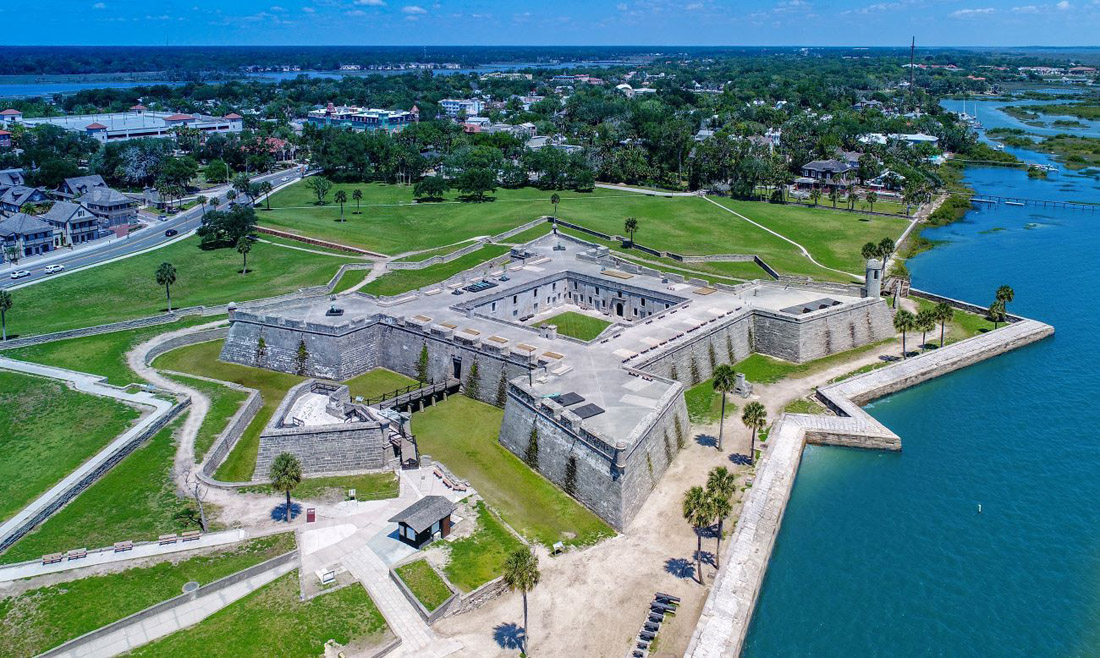
The influences instilled by the Spanish abound across the city, particularly in the waterside historic district I explored on foot for a few days. The most notable remnant of another time is the Castillo de San Marcos National Monument. Overlooking the Matanzas Bay, the 1672 fort was also built of coquina, a material prized for its ability to fend off cannon fire from British and pirate ships alike.
St. Augustine’s more recent history is credited to another pioneer: oil baron Henry Flagler. As a wealthy industrialist of the Gilded Age, he spared no expense to bring his sickly wife to a warmer climate and create appropriately posh playgrounds for his fellow millionaires. One of his primary achievements is now a centerpiece of Flagler College, a private liberal arts school whose students delight in giving tours of the palm treed property that makes up their campus. Ponce de Leon Hall is the school’s jewel that dates back to 1888 when Flagler opened it as the Ponce de Leon Hotel. Its 68-foot high rotunda and 70 original Tiffany stained glass windows of the students’ dining hall are still jaw-dropping.
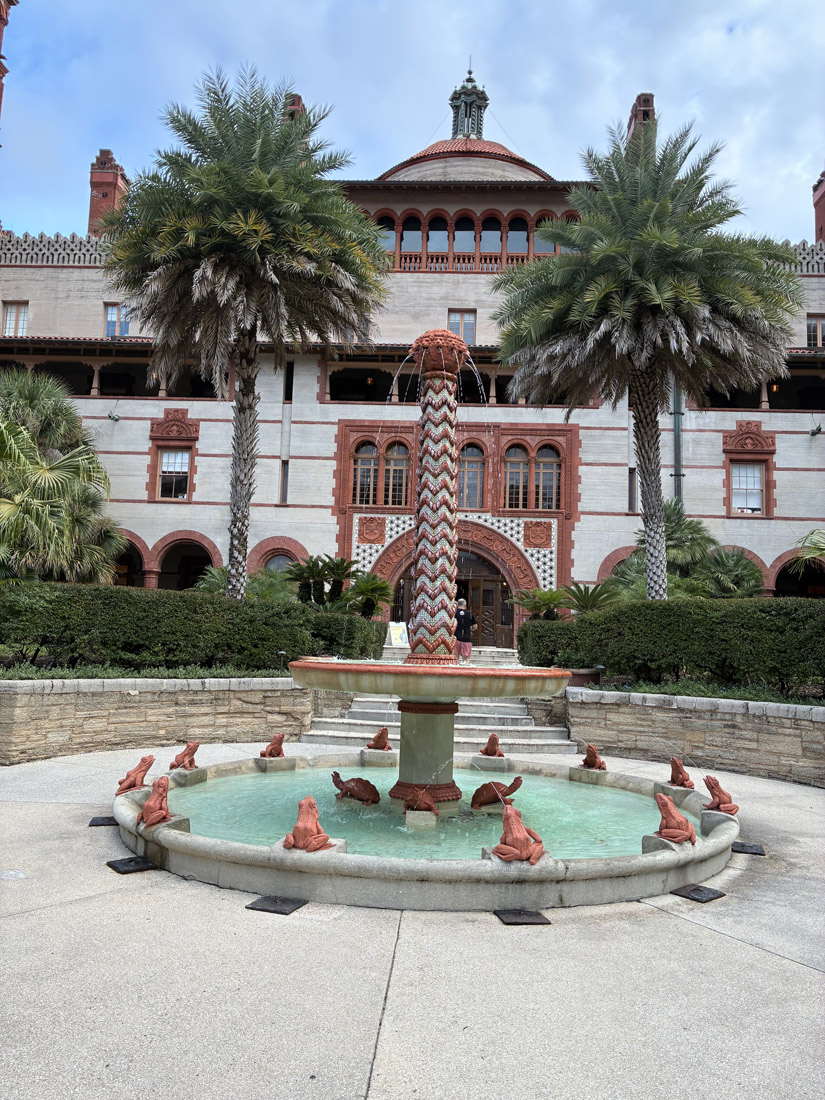
Across the street, Flagler also built the Hotel Alcazar that mirrors its sister property with a Spanish- tiled roof and covered verandas. In 1948, it became the Lightner Museum when Chicago publisher Otto Lightner set up his display of Victoriana before donating it to the city. Fans of “The Gilded Age” TV series can see the real things, from Tiffany lamps to old-time bicycles and musical instruments on display.
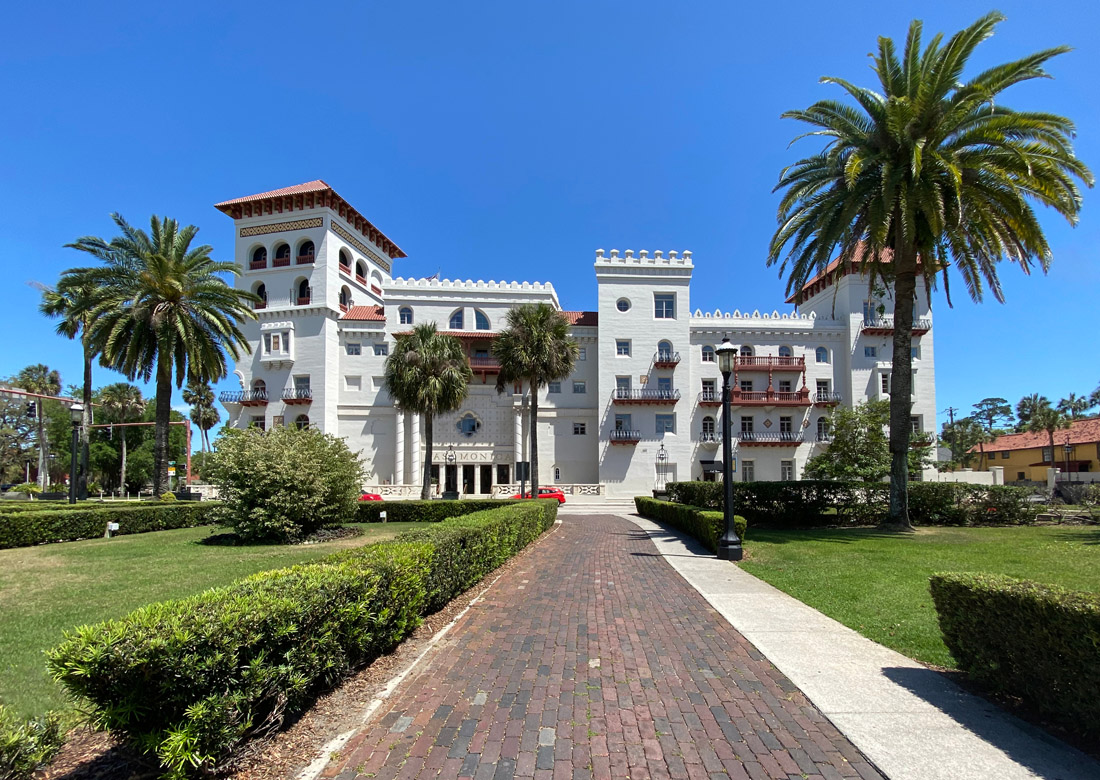
Overlooking the museum’s manicured hedges and lawns is Casa Monica Resort & Spa, another 1888 Flagler project. The interiors still boast gold-leaf archways and Moorish carvings, while the guestrooms are the latest in luxury. Staying there put me within an easy stroll past boutiques and historic sites as well as the brickpaved pedestrian St. George Street.
My visit to this town soaked in history wouldn’t have been complete without a sunset ghost cruise on the bay. Tales of the early settlers mingled with pirate myths more intriguing than scary. But they were all stories only a city as old as St. Augustine can tell.
visitstaugustine.com
@visitsta