



A Buckhead author helps kids handle major upheaval.
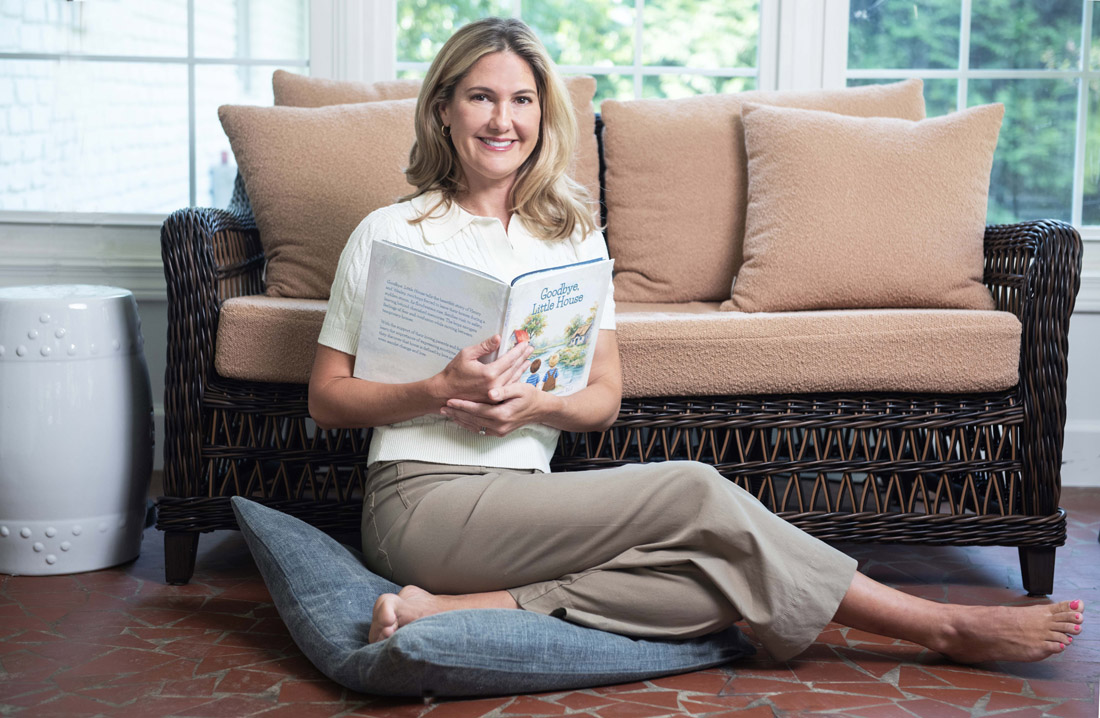
It really was a dark and stormy night when Category 2 Hurricane Helene slammed into Elisabeth Anderson’s Wesley Battle neighborhood in September 2024. Suddenly, the ranch house she shared with her husband, Michael, and then 7-week-old was awash in rapidly rising flood waters.
“It was supposed to be just a tropical storm,” Anderson says. “We slept in the main room, but when water started filling up the basement, we were afraid the house would wash away. I had never been through a flood, but I realized we had to flee our house.”
With the baby strapped to her chest, Anderson and her husband climbed into their car and set off for drier land. But within minutes of leaving the driveway, a wall of water powerful enough to crack concrete cascaded down the street and knocked the car sideways. “It was like white water rapids all around us; it was so scary,” Anderson says.
The couple climbed through the sunroof and were rescued in what Anderson calls a “miracle survival story.” But their house and belongings were gone.
What followed was a year of renting a house, battling insurance companies and assuring her 9- and 11-year-old stepsons that the world had not ended.
“They lived with us all summer, and they saw what happened on TV,” Anderson says. “Losing our house overnight, not having access to any of their stuff—it was a lot for them to process. They were freaked out.”
Through a Facebook group of others who had fled the storm, Anderson picked up an array of coping tips, including how to untangle the red tape of insurance claims and rebuilding. It was there she met J. D. Rainwater, a former child psychologist, and the two teamed up to write Goodbye, Little House that was published earlier this year. Aimed at kids from birth to 12, the book incorporates activities designed around the same coping techniques Anderson and other adult survivors used to deal with the crisis.
“The more we talked, the more I realized we could write a book together to help children handle sudden loss and process grief, be it from a flood or just moving unexpectedly,” Anderson says. “We wrote from our perspective of being mothers and survivors.”
The book also encourages kids to seek out others who have been through trauma and talk about it. “When you talk about what you’re going through, it helps you feel not so isolated,” Anderson says. “It teaches kids how to be there for other people going through similar things when something bad happens.”
An equity banker, Anderson has also started encouraging others to be ready for the unexpected. She was part of a group that met with lawmakers in D.C. about ways to help extreme weather survivors. And she’s working on another book about how to handle the financial aspects of a crisis.
“And as part of what I do, I’ve found ways to use what happened to us to help others be more prepared,” she says. “So much was lost, and with grace, we were spared. But I want to help other parents be as prepared as they can be before the storms of life hit.”
In August 2025, after almost a year of renting a house in Midtown, the family finally moved back into the rebuilt ranch, an event that came with one significant change, Anderson says.
“We now get automated alerts when the creek levels go above a certain height,” she says. “We’ve learned how to monitor creek levels so we’re never in that position of almost dying again.”
elisabethandersonauthor.com
@theelisabethedit
PHOTO: Joann Vitelli