




Dietician Cheryl Orlansky unpacks the protein craze that’s sweeping the nation.
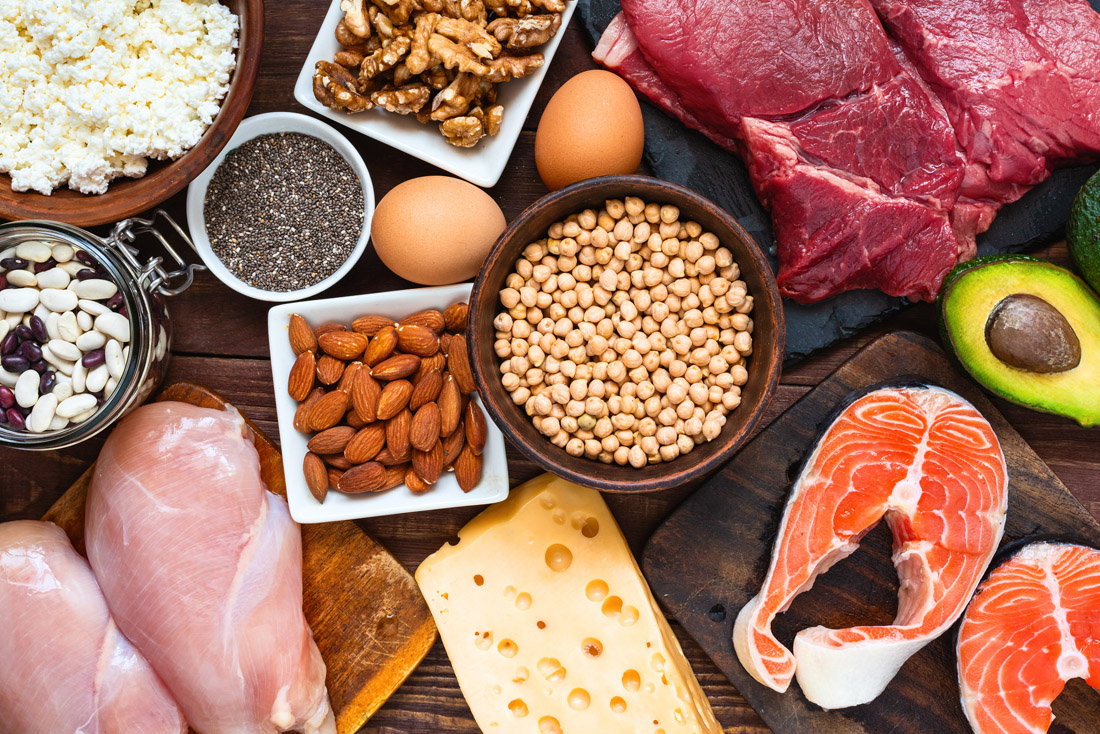

If you feel like you see the word “protein” everywhere in the grocery store, you’re not wrong. From bars and shakes to cereal and chips, every item seems to be packed with protein. Of course, while the popular macronutrient has become a big buzzword these days, it’s more than just a fad. Here, Atlanta-based registered dietician nutritionist Cheryl Orlansky, who has practiced for more than 28 years, explains why protein is so important and how to make sure you infuse your diet with the right type and amount for your personal needs.
How much protein do we need in our diets?
Our recommended daily amount of protein for all U.S. adults has been the same for more than 70 years: 0.8 grams per kilogram of body weight per day. That comes out to about 50 to 60 grams of protein for both men and women. But we really need to think about that as a minimum requirement. Many nutrition professionals feel that we need to change those requirements to optimize health for people who are trying to maintain muscle mass through different phases of life. Fortunately, in this country, we don’t see many protein deficiencies.
Why do we need protein?
Protein helps us protect muscle mass, which is our metabolic driver. As we age, we naturally lose muscle mass. That’s called sarcopenia. We become less sensitive to protein synthesis and don’t build as much muscle. So it’s really important for us to boost our protein intake as we age to prevent issues. And, of course, if you’re working out and doing a lot of strength training, or if you’re an athlete or a bodybuilder, protein helps you build muscle.
What are the best sources of protein?
Whole foods are going to be the best way to get protein: meat, chicken, fish, seafood. But there are other options as well, such as nuts and seeds, from cashews, peanuts and almonds to all kinds of nut butters. There’s also a lot of protein in chia seeds, flax seeds and toasted pumpkin seeds. Some whole grains like quinoa are great, too, as are beans and edamame. There’s even a good bit of protein in dairy products like cottage cheese. The goal is to diversify the protein in your diet so you can also get all of the building blocks you need.
We keep seeing protein snacks. Are these good options as well?
Everybody seems to be adding protein to processed foods. If you’re skipping a meal or need something on the go, there’s nothing wrong with that. But you really should choose foods in their natural state versus buying ultra processed foods. When protein is added to those processed foods, it’s usually whey protein or soy protein powder, which doesn’t taste very good. So they also add things like sugar substitutes or other additives into items like protein bars and shakes. Overall, whole foods are going to be so much better for you.
What do we need to know most about protein and diet?
You don’t have to obsess over it. Try to have a little bit of protein, about 20 to 25 grams, at each meal. I think that’s a nice benchmark. Also consider having a protein-rich snack during the day. Just remember that you also need to exercise. You can’t just eat a ton of protein and feel like you’re going to protect your muscles. When it comes to muscle mass, if you don’t use it, you’ll lose it. The magic happens when you exercise and also have protein in your diet.
ORLANSKY NUTRITION SERVICES
404.528.5912
orlanskynutrition.com
@corlansky