




Reading your pet’s body language.
Pets communicate in myriad ways. A tucked tail on dogs can demonstrate fear, and some may freeze in place when they are on alert. Cats meow at their humans and use interactions such as purring and hissing with each other.
Here, an expert helps us dissect specific cat and dog actions to learn the difference between distress and contentment.
DOG MANNERISMS
Tail Wagging
WHAT IT MEANS: According to veterinarian Dr. Randi Schroedel of Collier Animal Hospital, if a dog has its tail raised and wagging to the right, it conveys positive emotions and friendliness. If it’s raised and wagging more to the left, this is a sign of aggression or negative emotions.
Pacing
WHAT IT MEANS: “It’s common for people to think of excitement and stress as two separate things, but excitement is a type of stress, and both can lead to overstimulation and pacing,” Schroedel says.
Raised Hackles
WHAT IT MEANS: This involuntary movement is when a dog’s hair stands up on its back and neck and is similar to people getting goosebumps. “If hackles are up while staring intensely at another dog, it can be a sign of aggression,” Schroedel says. “But if their hackles are up when they are intensely sniffing a fire hydrant, it can be a sign of curiosity or surprise.”
Play Bow
WHAT IT MEANS: Schroedel says this action—when a dog lowers its front end to the ground with his backside raised—is typically associated with trying to engage another dog or a person in play. “They are challenging you to act silly!”
CAT MOVEMENTS
Purring
WHAT IT MEANS: This is usually a sign of contentment, but cats will also purr as a self-soothing mechanism when stressed or injured. “Get a feel for what is normal for your cat and contact your veterinarian if you notice any behaviors that are unusual for them,” says Dr. Taylor Sheridan, another veterinarian at Collier Animal Hospital.
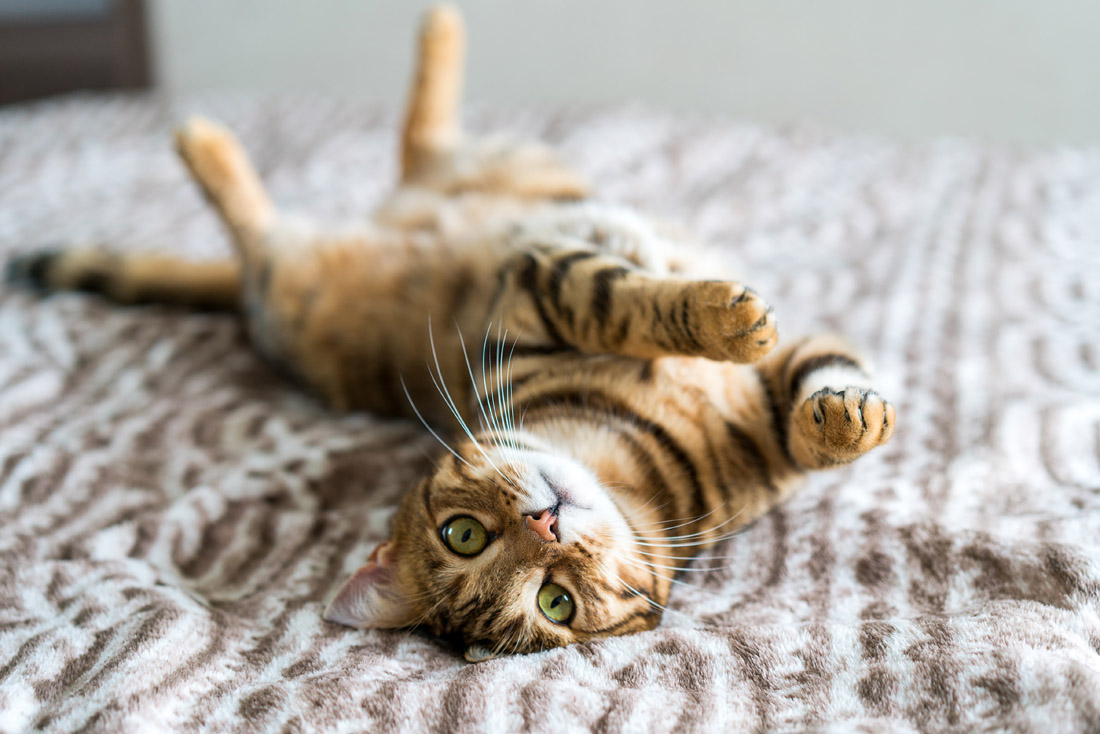
Showing the Belly
WHAT IT MEANS: According to Sheridan, cats display this behavior to show trust, but it can also be a defensive posture. “It’s important to evaluate other body language such as the position of their ears, hissing, etc.,” she says.
Teeth Chattering
WHAT IT MEANS: Cats often do this when they see prey, but it can also be related to underlying medical conditions such as dental disease. “If your cat is [is chattering while] looking out the window, they are probably feeling some kind of way about the birds outside,” Sheridan says. “But if they are chattering and not eating as usual, reach out to your vet.”
High Tail
WHAT IT MEANS: Cats love to communicate with their tails. According to Sheridan, a low tail can communicate fear, uncertainty or aggression. A puffed up or swishing tail can mean fear, annoyance or aggression. A tucked tail can signal fear, submission or stress.
Crouching
WHAT IT MEANS: Cats often do this when they are approaching prey, but crouching can also signify fear, anxiety or discomfort. “Crouching during play may not be a concern, but sudden crouching throughout the house would be more urgent,” Sheridan says.
According to Schroedel, discerning the stimulus for each pet behavior usually depends on the context around the event itself. Purring may not always mean pleasure, and raised hackles may not always be a sign of interest. It’s important to recognize which mannerisms are normal for your pets and when it’s time to call your vet.
COLLIER ANIMAL HOSPITAL
404.477.0200
@collieranimalhospital